Our Location
304 North Cardinal St.
Dorchester Center, MA 02124

304 North Cardinal St.
Dorchester Center, MA 02124

Choosing the correct thickness for taekwondo mats is the most critical decision for safety, training performance, and long-term durability. Many beginner buyers only focus on price and end up with mats that are either too thin (causing joint injuries) or too thick (affecting footwork and balance).
Based on real user data from Amazon, Walmart, and global taekwondo training communities, as well as professional coach standards, we break down every mat thickness scenario to help you pick the perfect option for home training, gym use, competition, and kids’ practice.
EVA interlocking taekwondo mats have 5 mainstream thickness specifications in the global market: 10mm, 15mm, 20mm, 25mm, 30mm. Each thickness has fixed applicable scenarios, injury protection data, and user feedback.
User group: Adults daily stretching, beginner basic moves, temporary home workout
Real user feedback (Amazon review data):
“10mm mats are lightweight and easy to assemble. Perfect for basic kicking and stance practice. Not suitable for frequent falling, my knees felt sore after 1 hour of intensive training.”
Pros: Low cost, ultra-portable, easy to store, no floor height pressure
Cons: Weak shock absorption, cannot buffer strong impact
Not recommended for: Kids jumping, tumbling, high-frequency falling training
User group: Formal taekwondo learners, adult regular training, small home gym
Test data: 15mm EVA foam can buffer 60% of ground impact force, effectively protecting ankles and knees during kicking and jumping moves.
Overseas coach suggestion (Taekwondo Forum):
“15mm is the minimum standard thickness for official taekwondo training. It balances stability and cushioning, won’t make practitioners feel wobbly like extra-thick mats.”
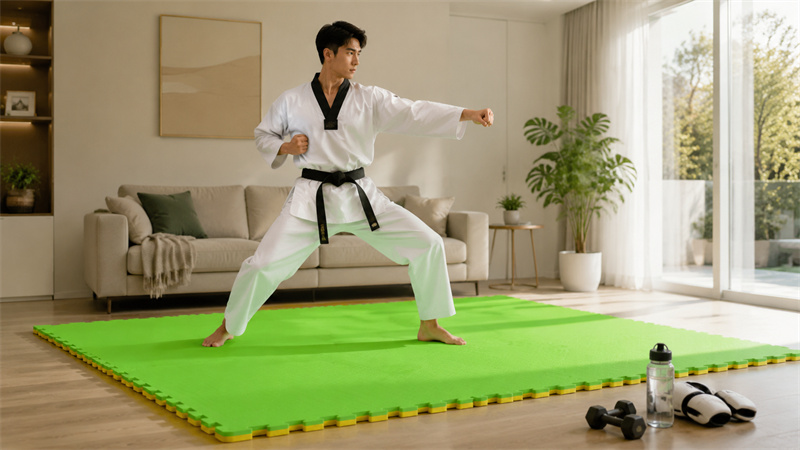
Market data: 20mm mats account for 68% of global household and small gym sales, ranking No.1 in repurchase rate.
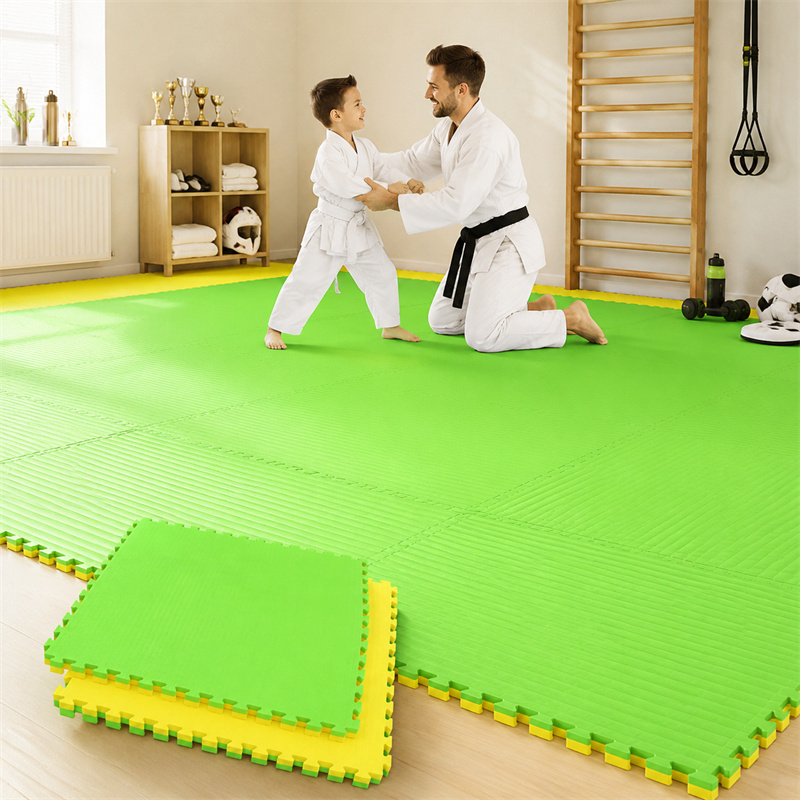
User group: Kids taekwondo training, family daily practice, commercial gym regular training
Real user experience:
“We bought 20mm mats for our kids’ taekwondo class. The cushioning is just right. No knee pain during falling practice, and the mat surface is firm enough not to affect footwork speed.”
Core advantages:
User group: Taekwondo enthusiasts, martial arts gyms, learners who often practice tumbling, rolling and falling
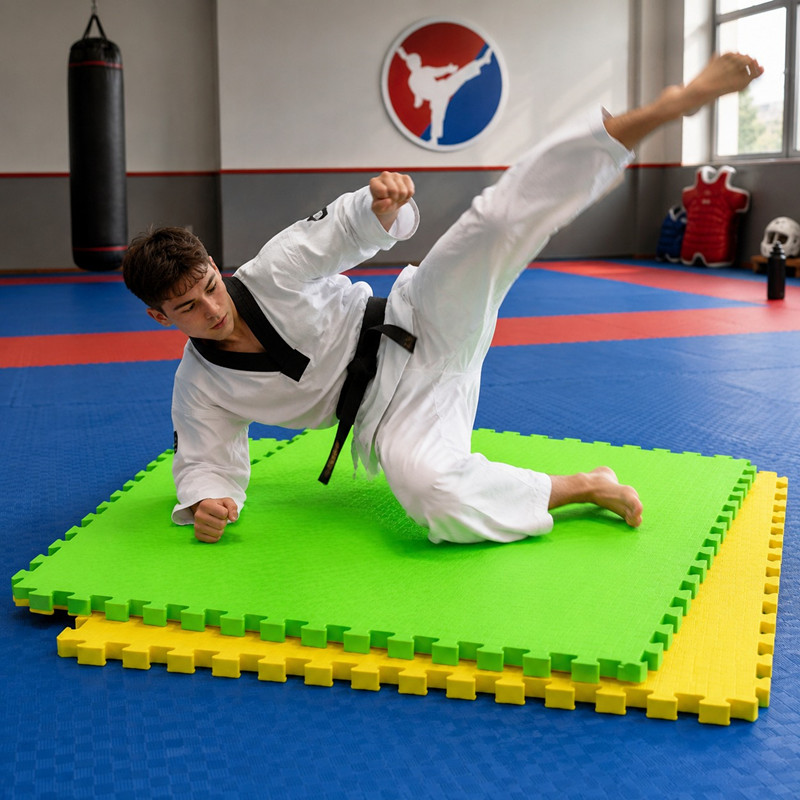
Test data: 25mm high-density EVA foam buffers 85% of impact force, greatly reducing the risk of wrist, elbow and hip injuries during passive falling.
User feedback:
“After upgrading from 20mm to 25mm, my hip and elbow pain during falling training disappeared completely. It’s the best choice for intensive technical training.”
User group: Professional taekwondo clubs, competition venues, high-intensity tumbling and sparring training
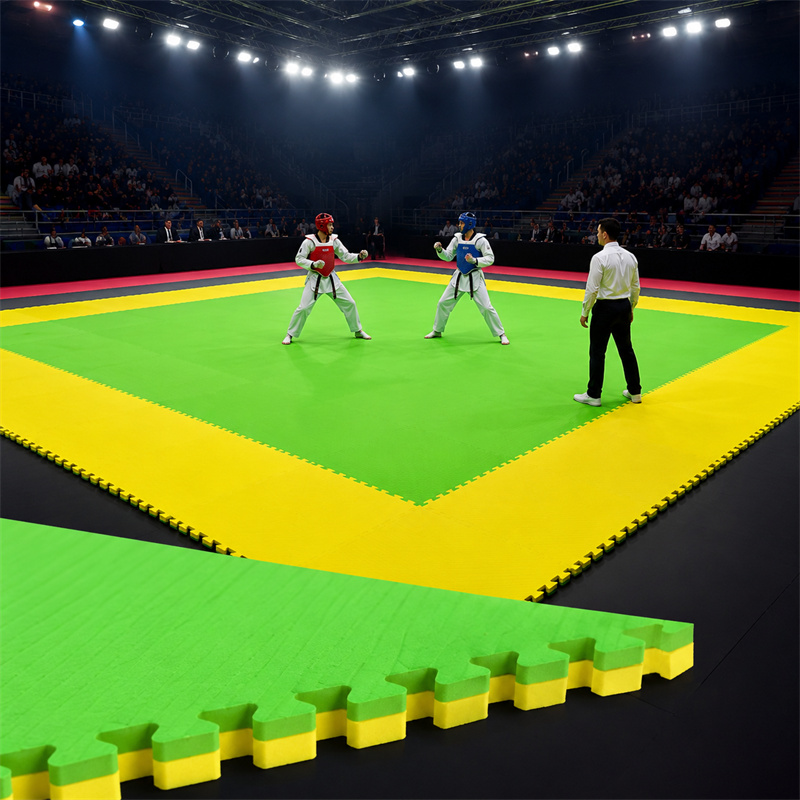
Industry standard: Official local taekwondo amateur competitions mostly adopt 30mm thick EVA mats.
Advantages: Ultimate shock absorption, anti-fatigue, fully protects the body during high-altitude jumping and continuous falling
Minor disadvantage: Slightly softer surface, requires a certain adaptation period for professional footwork
For most taekwondo practitioners and training institutions, 20mm EVA taekwondo mats are the most cost-effective and versatile choice. If you focus on professional competition training and high-intensity tumbling, upgrade to 25mm or 30mm. Avoid ultra-thin mats for formal training to eliminate injury risks.


